Every article, newest first. Page 5 of 8.

What's the right structure for a B2B homepage that turns strangers into pipeline?
The homepages that turn strangers into pipeline all move in the same order. Here's the section-by-section structure, from the hero to the trust close, and how to run it on your own page this week.
Why do most fractional CMO engagements fail, and how do you pick one that won't?
Most fractional CMO engagements don't fail on execution. They fail on five predictable setups baked in before day one. Here are the five failure modes, and the selection scorecard that tells you who won't fall into them.
Should we fix our messaging or hire more salespeople when the pipeline stalls?
When the pipeline stalls, the reflex is to hire another rep. But if the message is the bottleneck, more headcount just spreads the confusion faster. Here's how to decide where the money goes.

How do you build a brand voice guide your whole team (and your AI) will actually follow?
Most brand voice guides are three adjectives that die in a Drive folder. Here's how to build one your whole team, and your AI, will actually follow: a format-by-format Voice Spec built on your real narrative.
Should we show pricing on our B2B website?
Hiding your pricing behind a 'Contact Sales' gate feels like leverage. It's usually a confession that your message can't defend the value without you in the room. Here's why the Quote Wall makes a $5M-$75M B2B company invisible to buyers and to AI, a three-test diagnostic, and the fix that isn't a pricing page.
Can we pay to get our B2B company recommended by ChatGPT, or does buying AI citations backfire?
A cottage industry now sells paid brand mentions to get you 'recommended' by ChatGPT and AI search. Here's why buying citations backfires, and what actually gets a B2B company cited.

Is a fractional CMO worth it for a B2B company? The honest math.
A fractional CMO costs a fraction of a full-time hire, but the real ROI depends on one thing most founders skip: whether your message is clear enough to scale. Here's the honest math.
Should the founder be the face of the brand, or does that make a B2B company look too small?
Making the founder the face of the brand doesn't mean looking like a one-man show. It means your point of view is in the message instead of scrubbed out to look bigger. Here's why hiding the founder makes a $5M-$75M B2B company invisible, and the fix that scales past you.
What makes a go-to-market narrative fall apart in live sales conversations?
A go-to-market narrative collapses on a live call when the story lives on the slides, not in the rep. Here are the seven causes, and how to build a narrative your reps can actually carry into a real conversation.

How long does it take to fix B2B positioning? A realistic 90-day timeline
Fixing B2B positioning takes about 90 days when it's run as a structured project instead of a rewrite. Here's the honest week-by-week timeline, the five things that stretch a quarter into a year, and what decides your finish line.
Why does our cold outreach get ignored?
Your cold outreach isn't ignored because you sent too few emails. It's ignored because the message says nothing a stranger cares about, dressed up in a personalized first line. Here's the diagnostic, and the fix that isn't another tool.
The "So What?" Test: Does Every Feature in Your Deck Connect to a Buyer Outcome?
A one-question audit that shows you exactly which slides in your B2B sales deck describe your product instead of moving the buyer: say "so what?" after every feature and score the answer.
The 60-Second Test: Can a New Rep Explain What You Do, Who It's For, and Why You're Different?
Give a new rep sixty seconds to explain what you do, who it's for, and why you're different. If the answer only works coming from you, you don't have a sales team... you have a founder-dependency problem. Here's the test, the scoring rubric, and the fix.
The Cover-the-Logo Test: would a stranger know who your homepage is for in five seconds?
Cover your logo, hand your homepage to someone who's never heard of you, and give them five seconds. If they can't tell who it's for and what you do for them, your logo is doing the work your words should. Here's how to run the test and fix what it exposes.
Why do our customers describe what we do better than our own website?
Your best customers can explain what you do in one clean sentence. Your homepage can't. That's not a writing problem, it's a Recipe Homepage: you wrote your site from inside the kitchen, describing the ingredients, while your buyers only care about the meal, what actually changed for them. Here's the diagnostic, the pattern across 100+ B2B companies, and how to steal your message back from the people who already say it best, your customers.
What questions should you ask a messaging or positioning consultancy before you sign?
You're about to hand a stranger your company's story and up to $45K. Portfolio and logos won't tell you whether they'll rebuild your narrative or just repaint it. These ten questions will, and here's what a real answer sounds like versus what should make you walk.
Why do new sales reps take so long to sell our product?
New reps take months to sell your product, and you blame the hire, then the onboarding, then the product. The real culprit is the Tribal Pitch: the message that works lives in your head and your best rep's head, never written down, so every new hire reverse-engineers it for a quarter. Here's the diagnostic, the pattern across 100+ companies, and how to document your real story so a rep, or an AI trained on it, can carry it on day one.

Brand strategy firm vs messaging consultancy vs positioning consultant vs fractional CMO: what does each deliver?
Four kinds of B2B marketing help, four price tags, and no clean way to tell them apart. Here's what a positioning consultant, a messaging consultancy, a brand strategy firm, and a fractional CMO each actually deliver, and how to buy the right layer instead of overpaying to execute a decision nobody made.
Why does our messaging keep sliding back to features after we fix it?
This week a $19M Series B founder pulled up the homepage we clarified eight months ago, and it had quietly turned back into a feature list. Nobody rewrote the core copy on purpose. It crept. A capability line here, a new integration there, and the outcome story that used to open the page is now buried under a spec sheet. He thought the message went stale. Here's the harder truth: the message didn't decay, it fell. There's a gravity to it, and if you don't build something to hold it up, it drops back to describing what you built instead of what changes for the buyer. Here's why the fix never sticks, why AI makes the fall faster, and three tests to catch it before your win rate does.
StoryBrand for B2B SaaS: where it works, where it breaks, and what to use instead
StoryBrand makes your B2B SaaS homepage clearer. It doesn't make you distinct, doesn't handle the buying committee, and doesn't reach the AI engines that now build the shortlist. Here's where SB7 works, where it breaks at growth stage, and what to use on top of it.
Message testing vs message strategy: what Wynter measures, and what it can't tell you
Message testing tools like Wynter tell you whether the copy you already wrote lands with real buyers. They can't tell you the position is generic, the category is wrong, or that you're fighting no villain. Here's the line between testing a message and building one, and why testing downstream of a weak strategy just gives you a clearer version of sameness.
Category design vs positioning vs strategic narrative: which does a $5M-$75M B2B company need?
Category design, positioning, and strategic narrative get used like synonyms. They're three different tools for three different jobs. Here's what each does, who owns the idea, and which one a $5M-$75M B2B company actually needs first.
Why don't buyers remember what makes us different?
Buyers don't forget you because your product is weak. They forget because a feature list can't survive the drive home. Here's why your message doesn't stick, and the fix.
Solution-Centric Marketing is why buyers tune you out: the problem-centric fix
Buyers don't reject your message, they tune it out. Solution-Centric Marketing ... leading with your product instead of the buyer's problem ... is why. Here's the problem-centric fix.
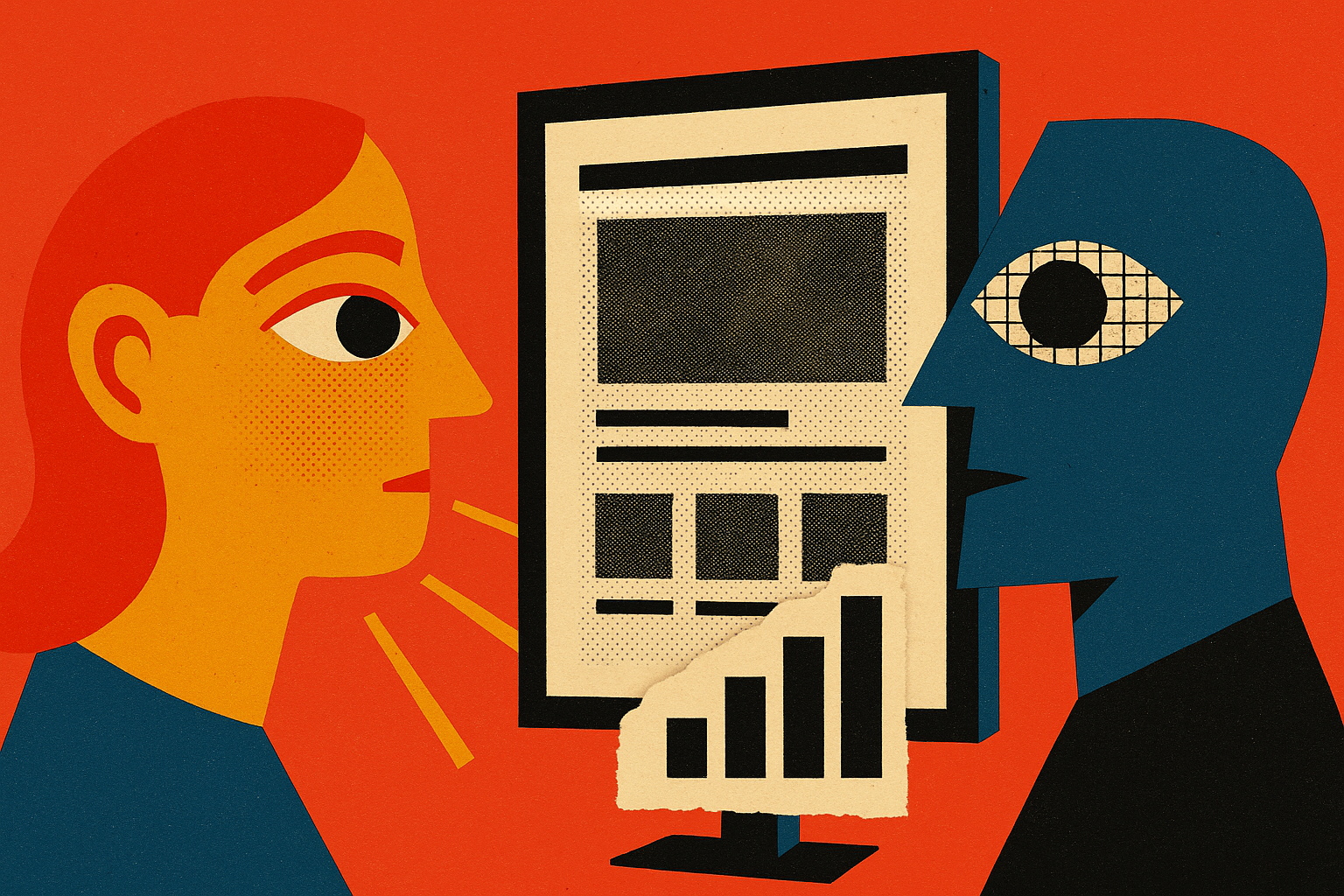
What is a Brand Signal Score? The 19-criteria homepage diagnostic for AI-era B2B
A Brand Signal Score reads your B2B homepage the way a first-time buyer and an AI engine both read it, then scores it on 19 criteria across four signals. Here's what it measures and how to read your score.

Who actually fixes B2B homepage messaging? Six firms and frameworks compared
Six kinds of firm fix B2B homepage messaging, and each one fixes a different layer. Here's the honest field, matched to the problem you actually have.
Why do sales teams struggle without a shared sales-enablement narrative?
Sales teams struggle without a shared narrative because every rep fills the gap with their own version of the story. The buyer's committee ends up arguing about what looks like five different companies. It's a messaging problem wearing a sales-performance costume, and more training won't fix it.
How do you message a B2B company with multiple products without confusing buyers?
A multi-product B2B company confuses buyers when its homepage becomes a catalog. The fix isn't a shorter list. It's one narrative spine, the transformation all your products deliver, that every product ladders up to. Here's how to find it and why it matters more now that AI briefs your buyers first.
What does a brand positioning workshop for a leadership team actually look like?
A brand positioning workshop gets a founder and their executives in one room to agree on who they're for, what problem they kill, and why a buyer picks them. Here's the agenda, the format, and what you walk out with.

How do we write a blog post that AI engines will actually quote?
AI engines don't cite pages, they cite passages. Here's how to write blog posts in liftable, standalone chunks that ChatGPT and Perplexity will quote when buyers ask for recommendations, and why structure alone isn't enough.
Why do buyers call our product a "nice to have"?
A founder read me a message from a prospect this week. 'We love it. It's a nice to have for us. Let's circle back next year.' He thought it was a budget problem. It wasn't. Nice to have is a ranking problem, and the ranking got decided by his message before he ever got on the call. Here's why buyers file you as optional, why it's worse in 2026, and three tests to find out if your own message is doing it to you.

What happens in a messaging strategy session, and how do you book one?
A messaging strategy session isn't a sales pitch, it's a 90-minute diagnostic. Here's exactly what happens in one, what you walk away with, and how to book.

Sales enablement consultants vs messaging consultants: who fixes what, and who to hire?
A messaging consultant fixes your story. A sales enablement consultant fixes the system that carries it into deals. Buy the wrong one and you spend a quarter scaling a message that was never going to land. Here's how to tell which one your stalled pipeline actually needs.

How much does strategic messaging consulting cost? A 2026 breakdown by engagement type
Strategic messaging consulting in 2026 runs from a free diagnostic to $250,000 and up. Most B2B founders land in the $25K to $45K full-rebuild band. Here's the honest breakdown by engagement type, and what actually moves the number.
How do you make B2B marketing sound authentic instead of corporate?
Your homepage sounds enterprise-grade, buttoned-up, professional. And it makes you cringe a little when you read it out loud. That's not a writing problem. It's the Impressiveness Trap, and in the AI era it's what rounds you into the category average.
Does scaling AI-generated content help my B2B company get found, or does Google penalize it?
Google doesn't penalize AI-generated content for being AI-made. It penalizes commodity content, the kind anyone could generate from public information. Here's how to scale AI content that gets found instead of buried.
What is message drift, and how do you keep brand messaging consistent across channels?
Your homepage, deck, LinkedIn, and sales calls each describe a slightly different company. That's not a writing problem. It's message drift, and in the AI era it's what makes buyers and machines pass you over.
Why does AI recommend our competitors and not us?
When ChatGPT or Perplexity names your competitor and skips you, it isn't ranking your product. It's repeating whoever the web describes most clearly and consistently. Here's the real mechanism, and how to get recommended instead.

How do you position a healthtech company for clinical and economic buyers at once?
Healthtech founders sell beautifully to clinicians, then watch deals stall in finance. Here's how to position for clinical and economic buyers with one narrative and two proof layers.
How do you stop B2B marketing from attracting bad-fit leads?
Monday I got on a call with a $16M B2B software CEO whose marketer was busy. Blog posts, ads, a lead magnet, the whole machine humming. Leads were coming in. Almost none were the customer she built the company for. Solo founders, two-person startups, a guy who wanted a free version, while the mid-market operations leaders she actually built this for never showed. Her question: are we just bad at marketing? No. The marketing is doing exactly what the message told it to do. A message built to appeal to everyone gets answered by the people with the most time and the least money. Here's why your marketing attracts the wrong customers, and three tests to give your message a repel pole.
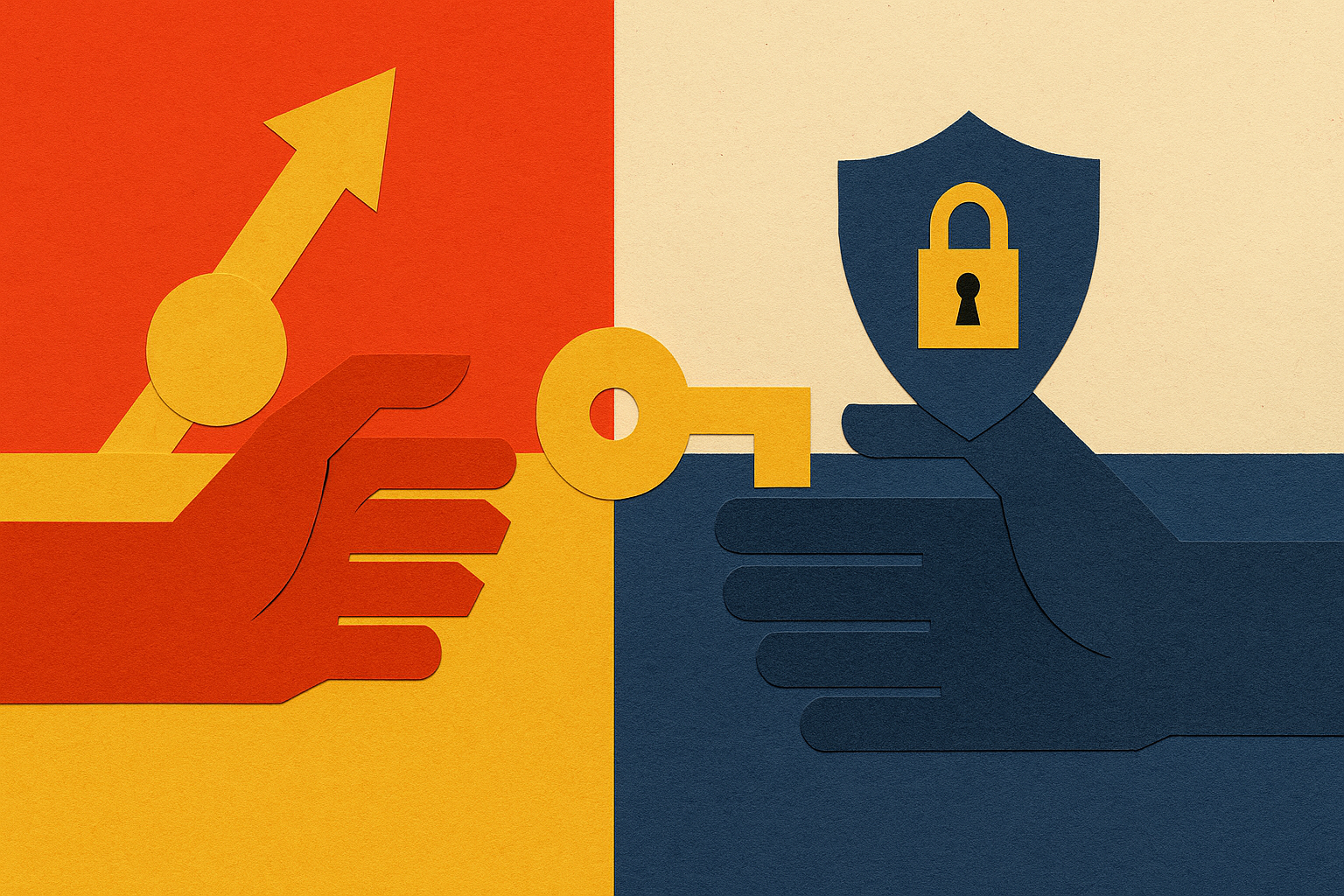
How do you message a fintech product to both economic buyers and compliance?
In fintech, two people in the room want opposite things. The economic buyer wants growth. The risk and compliance buyer wants safety. Here's how to message one fintech product to both without watering down either.
How do you position a cybersecurity company when every vendor claims the same things?
Cybersecurity messaging has collapsed into sameness. Every vendor claims AI-powered, next-gen, zero-trust protection. Here's how to position a B2B security company so buyers and AI engines can finally tell you apart.
How do you simplify complex B2B messaging without dumbing down the product?
A cybersecurity CEO shared his screen this week and walked me through his homepage. Ninety seconds in he was three layers deep in his detection architecture and lit up about it. Then I asked him to say what he does in one breath, and it came out forty seconds long with 'orchestration' in it twice. Here's the trap almost every technical founder falls into: they think simplifying the message means dumbing down the product, so they keep the explanation as complex as the build. It doesn't. You simplify the door, not the building. AI made over-explaining free and made it fatal, because the machine briefing your buyer can only repeat what it can compress. Here's why the smartest founders write the worst homepages, and three tests to tell if yours is a door or a wall.
How do we avoid getting cut when buyers consolidate their software stack?
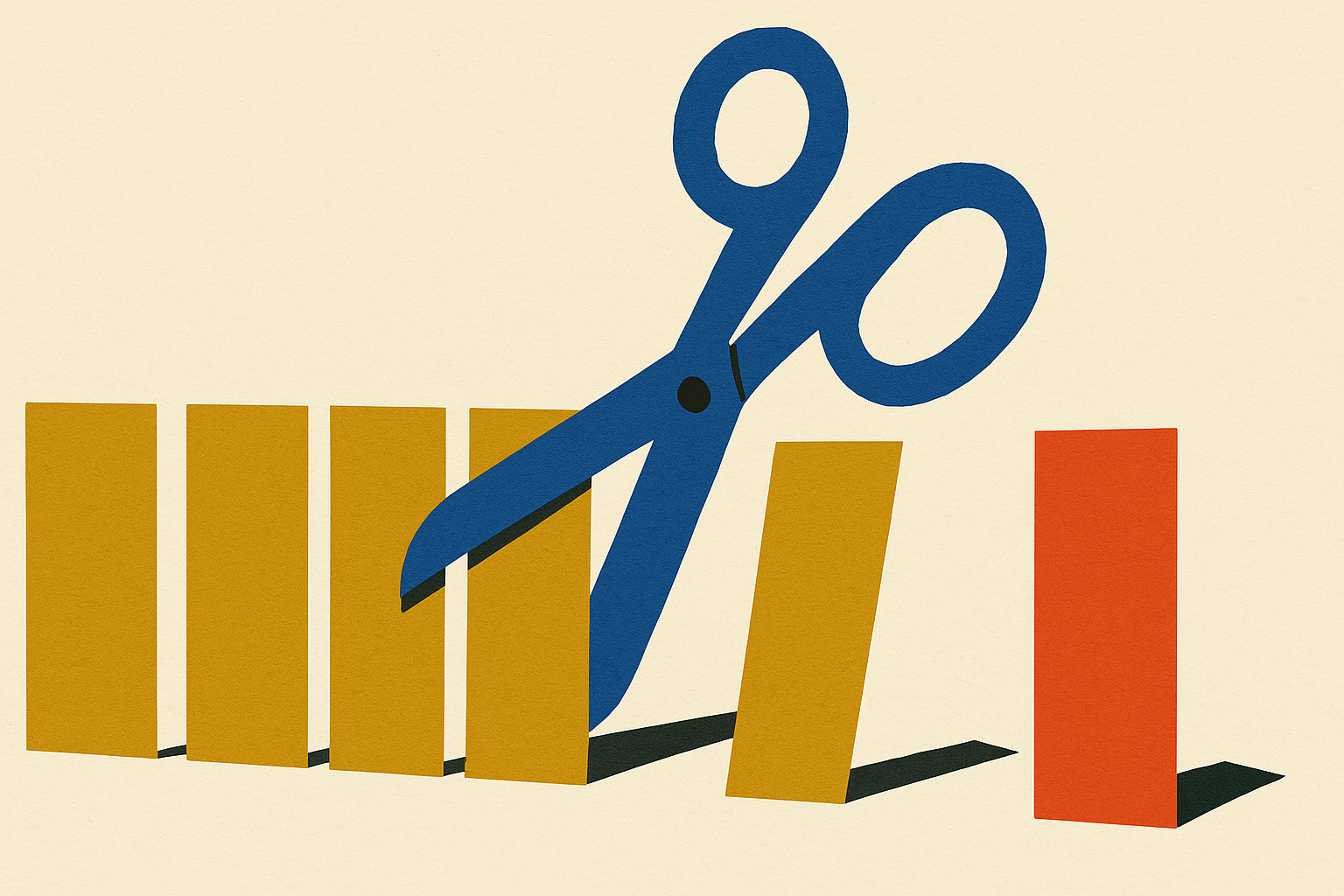
68% of tech leaders are consolidating vendors this year. The companies getting cut aren't the worst products, they're the ones buyers can't tell apart. Here's how a clear narrative identity keeps you off the cut list.
Why doesn't LinkedIn engagement turn into B2B pipeline?
Last week a founder pulled up his LinkedIn and showed me the numbers. Six months of posting, followers tripled, one post past eighty thousand impressions. He was proud, and he should be... showing up in public is the right instinct. Then I asked the only question that matters: how many of those people are your buyer, and how many deals came from any of it? Silence. The post that blew up was an unpopular-opinion take about hiring that every other founder reshared. The people clapping were peers and marketers. Not one was a buyer. He'd built reach, not recognition. Here's why founder content gets engagement but no pipeline, why it's worse now, and three tests to tell which one you're actually building.

Why does my B2B company rank #1 on Google but never get cited in AI search?
You rank #1 on Google and ChatGPT still recommends your competitors. Here's why ranking isn't citation, and what actually gets a B2B company named in AI search.
StoryBrand vs Obviously Awesome vs Fletch vs MMF: Which B2B Messaging Method Fits?
StoryBrand, Obviously Awesome, Fletch PMM, and the Magnetic Messaging Framework solve different problems. Compare the decision each helps you make, the output, current published pricing, and the handoff still required.
Product-market fit vs message-market fit: why selling stays hard after PMF
You found product-market fit. Customers stay, expand, refer. Why is cold pipeline still such a grind? Because product-market fit and message-market fit are two different fits, and the second one never comes free with the first. Here's the gap, why your warmest early customers hid it from you, and a 3-test diagnostic to find it.
Or find your problem